
Company news
How to Choose the Right Custom Packaging Bags for Your Business
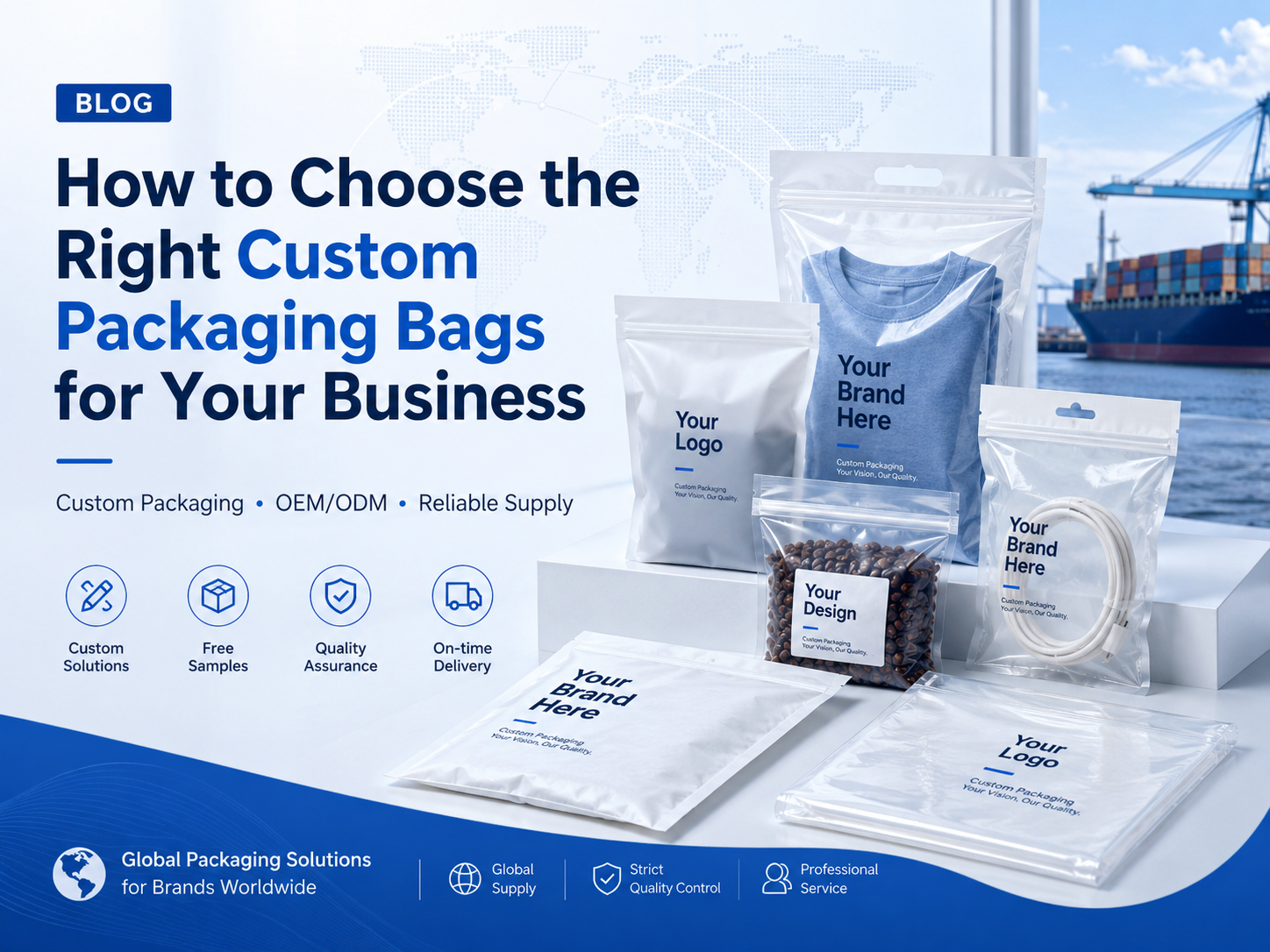
Packaging plays an important role in modern business. Whether your products are sold through retail stores, online platforms, distributors, or industrial supply chains, the right packaging bag can protect products, improve presentation, and support brand recognition. For buyers who need plastic packaging bags, there are many product options available. Common choices include transparent frosted zipper bags, PE clothing storage zipper bags, thickened slider zipper bags, self-sealing bags, and other customized packaging bags. Each type has different advantages depending on the product being packed. For example, zipper bags are suitable for products that need repeated opening and closing. They are commonly used for clothing, accessories, daily-use items, samples, and storage packaging. PE clothing storage zipper bags offer a clean and practical solution for garment packaging, while thickened slider zipper bags provide stronger usability and better convenience for customers. Before choosing a packaging bag, buyers should first consider the product application. Packaging for food products may focus more on cleanliness and sealing performance. Packaging for daily chemical products may require better thickness and durability. E-commerce packaging needs to balance protection, cost, and shipping efficiency. Hardware and industrial products may need stronger materials to prevent damage during storage or transportation. Customization is another key factor. A standard bag may be enough for simple storage or wholesale use, but customized packaging can help improve brand value. Buyers can customize size, material, thickness, printing, logo, label, and packing method according to their market needs. OEM and ODM services are especially useful for brand owners, distributors, and companies that need long-term packaging solutions. When preparing a custom packaging order, it is important to provide clear information to the supplier. Buyers should prepare product size, bag size, material requirements, thickness, order quantity, printing design, logo file, packing requirements, and target delivery schedule. If drawings or physical samples are available, they can help the supplier understand the requirements more accurately. Sample confirmation is highly recommended before bulk production. A sample allows buyers to check the material feel, transparency, zipper smoothness, sealing effect, printing quality, and overall appearance. This helps reduce communication errors and ensures that the final bulk order meets expectations. Delivery time is also an important concern for international buyers. Some regular packaging models may be available in stock, while customized products need production time. Reliable suppliers usually arrange production according to agreed lead times and keep buyers updated during the process. For overseas trade, buyers should also consider payment documents and export support. Proforma invoices and commercial invoices are commonly used for payment and customs clearance. Clear documents can make the purchasing and shipping process smoother for international customers. Long-term cooperation can bring more value than one-time purchasing. For distributors and regular buyers, a stable supplier can offer better pricing, faster communication, consistent quality, and stronger support for market development. If you plan to purchase packaging bags regularly, it is worth discussing long-term cooperation or distributor policies with the supplier. In conclusion, choosing the right custom packaging bag requires careful consideration of product use, material, design, customization, sampling, delivery, and supplier service. A professional packaging bag manufacturer can help buyers reduce sourcing risks, improve product presentation, and build a more stable supply chain for global markets.