

Quick answer: Surface finish and printing are chosen in a fixed order, and reversing the order is the most expensive mistake in custom packaging. First decide the film — because a matte finish on a stiff OPP bag and a matte finish on a soft PE bag are different products. Then decide the print process, which is driven by order quantity and by how many colours the artwork uses. Only then choose the effect: gloss, matte, metallised, spot varnish, cold foil or embossing. Ask for a physical sample of the exact film-plus-print combination, because finish cannot be approved from a screen.
The order of decisions: film, then print, then finish
Custom packaging projects go wrong when the brand decides the look first and the material last. The material determines what the print process can physically achieve, and the print process determines which finishes are available. The correct sequence is:
- Film and structure. Polypropylene (OPP / CPP), polyethylene (PE / LDPE / HDPE), CPE and EVA, PET, kraft paper laminates. This sets stiffness, clarity, sealability and the surface the ink will sit on.
- Print process. Flexographic, gravure, digital or screen printing. Driven by quantity, number of colours and how fine the detail is.
- Finish and effect. Gloss, matte, frosted, metallised, spot varnish, cold foil, embossed texture, or a hot-stamped logo.
- Closure and hardware. Zipper profile, slider, adhesive strip, drawstring, die-cut handle, hang hole, euro slot.
Because each step constrains the next, a change late in the project cascades. Switching from a gloss OPP bag to a matte frosted CPE bag after artwork approval changes the bag's stiffness, its transparency, the seal temperature the factory must run, and how the printed colours will appear — four changes from one decision.
Print processes compared: flexo, gravure, digital, screen
| Process | How it works | Best quantity range | Strengths | Limitations |
|---|---|---|---|---|
| Flexographic | Inked rubber or photopolymer plates on a rotary press | Medium to high volume | Low plate cost, fast changeover, good on PE and paper, economical at volume | Fine gradients and small type are less crisp than gravure |
| Gravure | Engraved copper cylinders, ink doctored into cells | High volume | Best colour consistency and finest detail; ideal for photographic artwork | High cylinder cost — only pays back on large runs; long setup |
| Digital | Inkjet or toner printed directly, no plate or cylinder | Low to medium, and variable data | No tooling cost, fastest sampling, supports versioning and short runs | Higher cost per unit at volume; ink adhesion on PE and matte film must be tested |
| Screen printing | Ink pushed through a mesh stencil | Low volume, bold graphics | Very thick ink layer — excellent opacity on dark or coloured film, good for matte and glitter inks | Coarse detail; slow; each colour is a separate pass |
| Hot stamping / cold foil | Metallic foil transferred by heat and pressure, or by adhesive plus pressure | Any volume, per application | Genuine metallic appearance on logos and accents | Adds a process step and tooling; foil placement needs accurate registration |
Two practical rules follow. Below roughly a few thousand pieces, digital printing usually beats gravure on total cost, because there is no cylinder to amortise. Above that, gravure becomes cheaper per bag but only pays back if the artwork does not change — a redesign can mean new cylinders. For PE bags and paper bags, flexographic printing is normally the practical default.
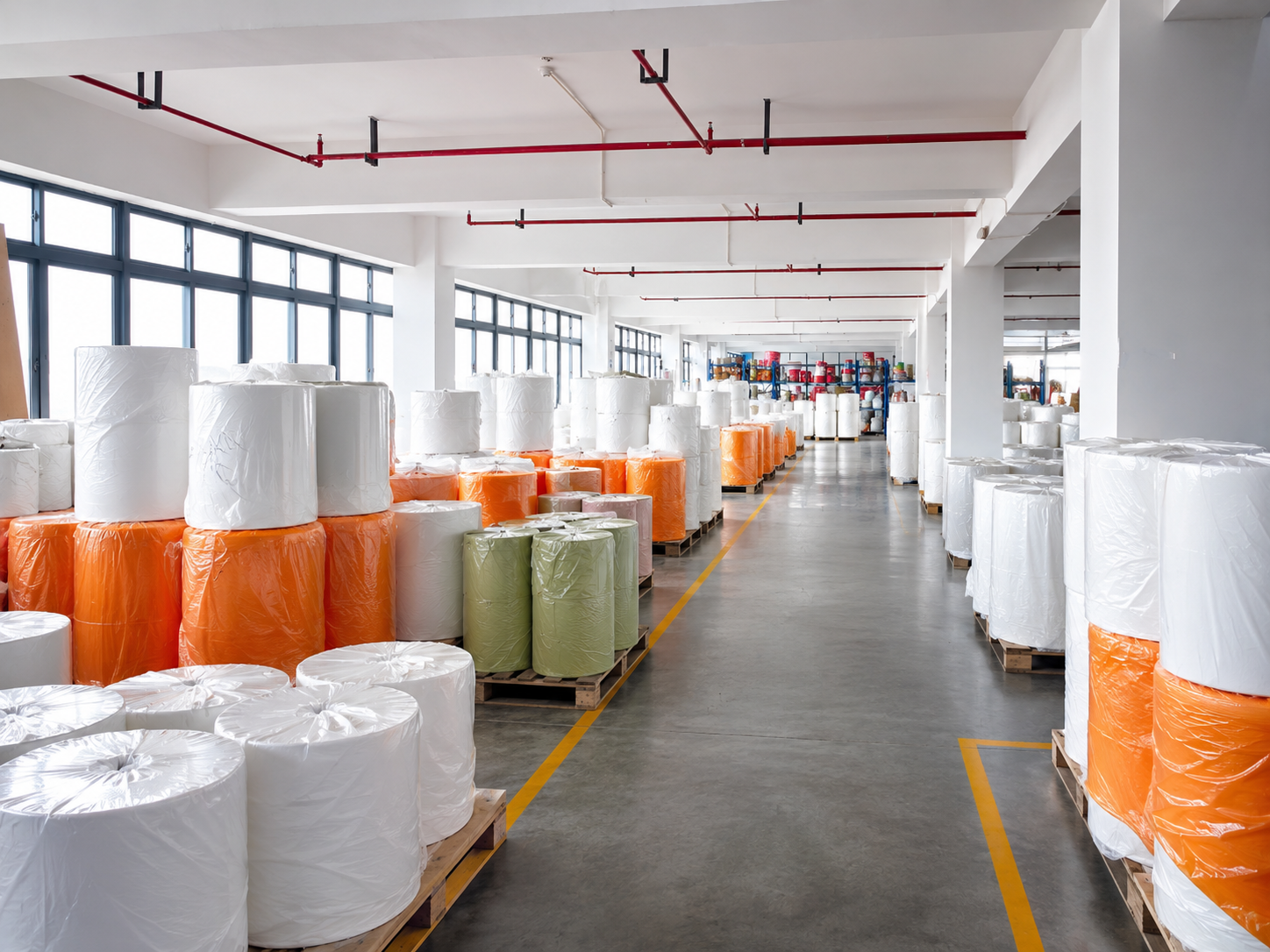
Surface finishes and effects, and what each one costs you
| Finish | How it is produced | Where it works | What it costs you |
|---|---|---|---|
| Gloss | None — the natural surface of OPP or PE film | Retail display where the product must shine | Nothing extra, but scuffs and fingerprints show clearly |
| Matte | Matte coating, or a matte BOPP outer layer | Premium and minimal branding; soft-touch feel | Colours lose some saturation; dark inks appear less deep; marks show less than on gloss but more than on textured film |
| Frosted / translucent CPE | Frosted film, not a coating | Apparel, accessories, electronics, cosmetics | Reduces transparency by design; requires thicker film for the same strength; narrower seal window than clear PE |
| Metallised (VMPET) | Vacuum deposition of aluminium onto film | Snacks, coffee, premium retail | Opaque; barrier is far below foil; the metallic layer scratches, so it must be protected inside a laminate |
| Spot varnish / gloss over matte | Registered varnish applied over part of the design | Highlighting a logo or a pattern on a matte base | Adds a printing station and registration tolerance; effect needs a physical proof |
| Cold foil | Adhesive pattern plus pressure-applied metallic foil | Metallic accents on lower-cost film | Registration limits; the foil edge is less sharp than hot stamping |
| Embossed / textured | Pattern pressed into the film or the laminate | Distinctive tactile branding | Tooling cost; reduces print clarity in the textured zone |
A finish is not decoration applied after the fact — it is part of the film. That is why a matte bag cannot simply be "made" by asking for matte ink, and why a frosted CPE bag cannot be reproduced on clear OPP film. Finish and film must be specified as one item, ideally with a named film grade.
Colour control across film, ink and finish
The same artwork will not look identical on gloss OPP, matte BOPP, frosted CPE and white kraft paper. Each substrate has a different surface brightness and a different ability to absorb or reflect light, so the same ink reads differently on each:
- Transparent film shows what is behind it. If the bag is filled with a dark product, the printed colour darkens accordingly. Artwork must therefore be evaluated on a filled bag, not on an empty one.
- White ink is required as a backing layer on transparent film whenever the design must look the same as it does on paper. This adds a printing station and is a common omitted cost.
- Matte substrates mute saturation. A vivid brand colour may need a stronger ink formulation or a gloss varnish over that element to hold its intensity.
- Metallised and foil areas reflect ambient light, so a metallic logo can appear silver, warm or dark depending on the lighting of the store — approve it in at least two light conditions.
The control point is a signed sample. Approved colours should be recorded against a physical sample and a light source, because a photograph of a bag is not a colour standard — cameras, screens and lighting all shift the result. Where a brand has a printed brand book, the reference should be converted to the specific film being used and signed off on that film.
What a factory needs from you before it can print
- Dieline or bag dimensions — width, height, gusset or bottom gusset, seal width, handle position.
- Artwork in vector form with a stated colour reference (Pantone or CMYK), plus fonts. Raster logos cause edge quality problems on any printer.
- Print side and orientation — front only, front and back, or wrap-around; and whether the print is surface or reverse-printed inside the laminate.
- Order quantity and expected repeat frequency, which decides digital, flexo or gravure.
- Target market, which decides whether the design needs barcode, recycling mark, warning text or a specific language set.
- Product to be packed, including its weight, whether it is dusty or oily, and how it will be filled.
- Finish requirement stated as film plus effect, not as a colour impression.
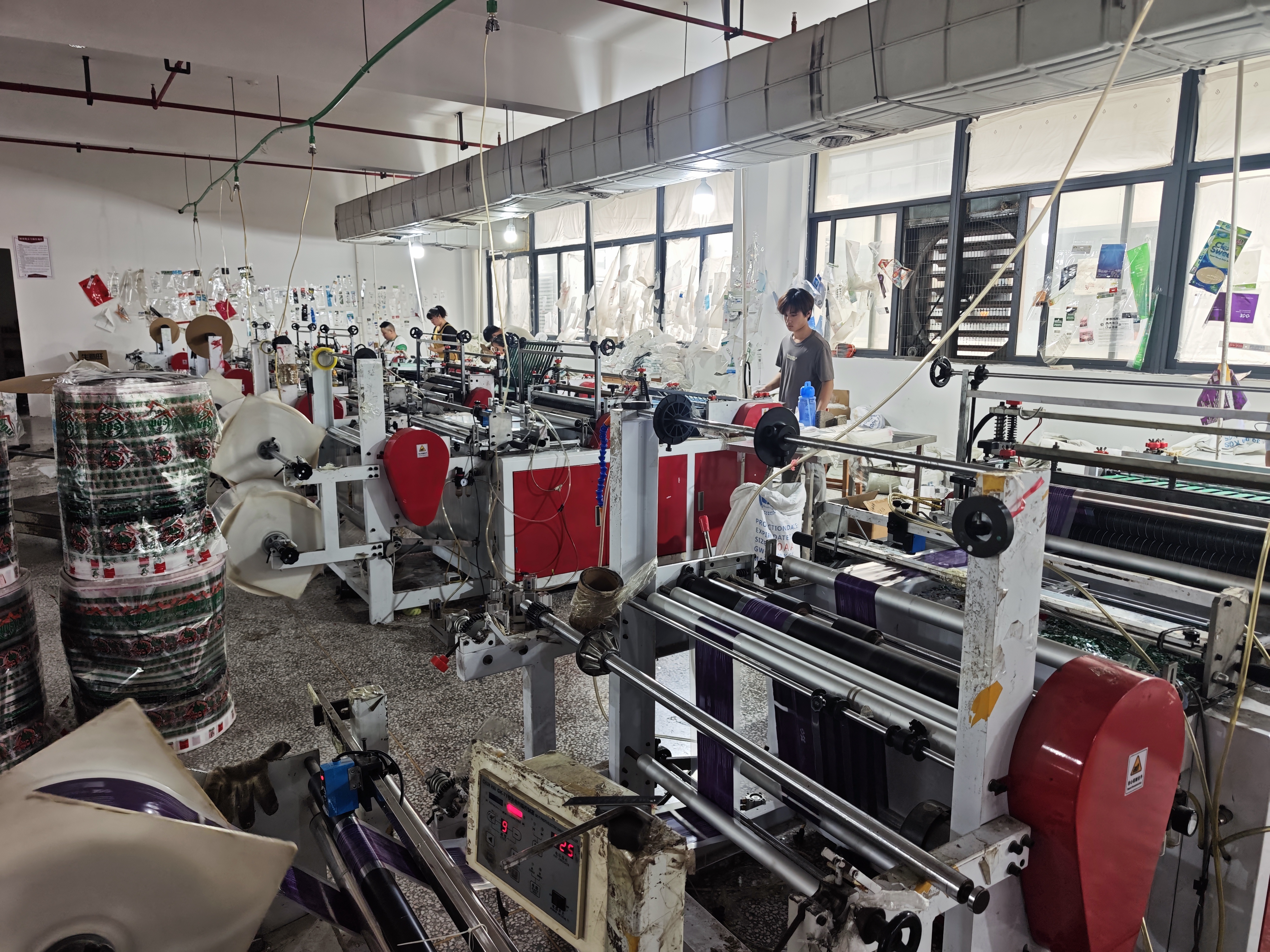
Sending these seven items together is the difference between one sample round and three. At Dongyang Jinhe Packaging, OEM and ODM support covers size, material, thickness, printing and craft customisation, with sample development before bulk production — and buyers are encouraged to send a drawing, a physical sample or even just a packaging idea, since the design team can turn it into a working specification.
Inspection criteria to write into the order
| Criterion | What to state | Why it matters |
|---|---|---|
| Colour match | Agreed against the signed sample under stated lighting, with an acceptable visual tolerance | Prevents the "same artwork, different colour" dispute |
| Print registration | Maximum offset between colours, in millimetres | Registration error is what makes a logo look blurred |
| Print coverage | Extent of the printed area and confirmation that ink stays out of the seal zone | Ink in the seal zone reduces seal strength and causes leaks |
| Ink adhesion | Scuff or tape test on the finished bag | Surface-printed PE and matte film are the highest risk |
| Bag dimensions | Width, height, gusset and seal width with tolerances | Dimensional drift breaks automatic filling lines |
| Thickness | Nominal micron with tolerance, verified by micrometer on the finished bag | A thinner bag than quoted is the most common silent downgrade |
| Closure function | Zipper or slider open-and-close cycles without failure; adhesive strip peel strength | Closure failure is a customer complaint even if the seal is perfect |
| Appearance | No wrinkles, no visible defects, correct packing count per carton | Defines what "acceptable" means before the goods ship |
Dongyang Jinhe Packaging produces OPP bags, zipper bags, PE bags, food bags, gift bags and courier bags from a 1,000-square-metre factory in Dongyang, Zhejiang, with 16 years of manufacturing experience and exports to Europe, America, the Middle East and South Asia. Customisation covers size, material, thickness, printing, pattern design and special processes. Send us your artwork, bag dimensions and target market and our team will reply within 24 hours with a finish recommendation, a sample plan and a quotation.